- Home
- Places to Visit
- Sigiriya Rock Fortress
Sigiriya Rock Fortress: History and Visitor Guide
What is Sigiriya Rock Fortress?
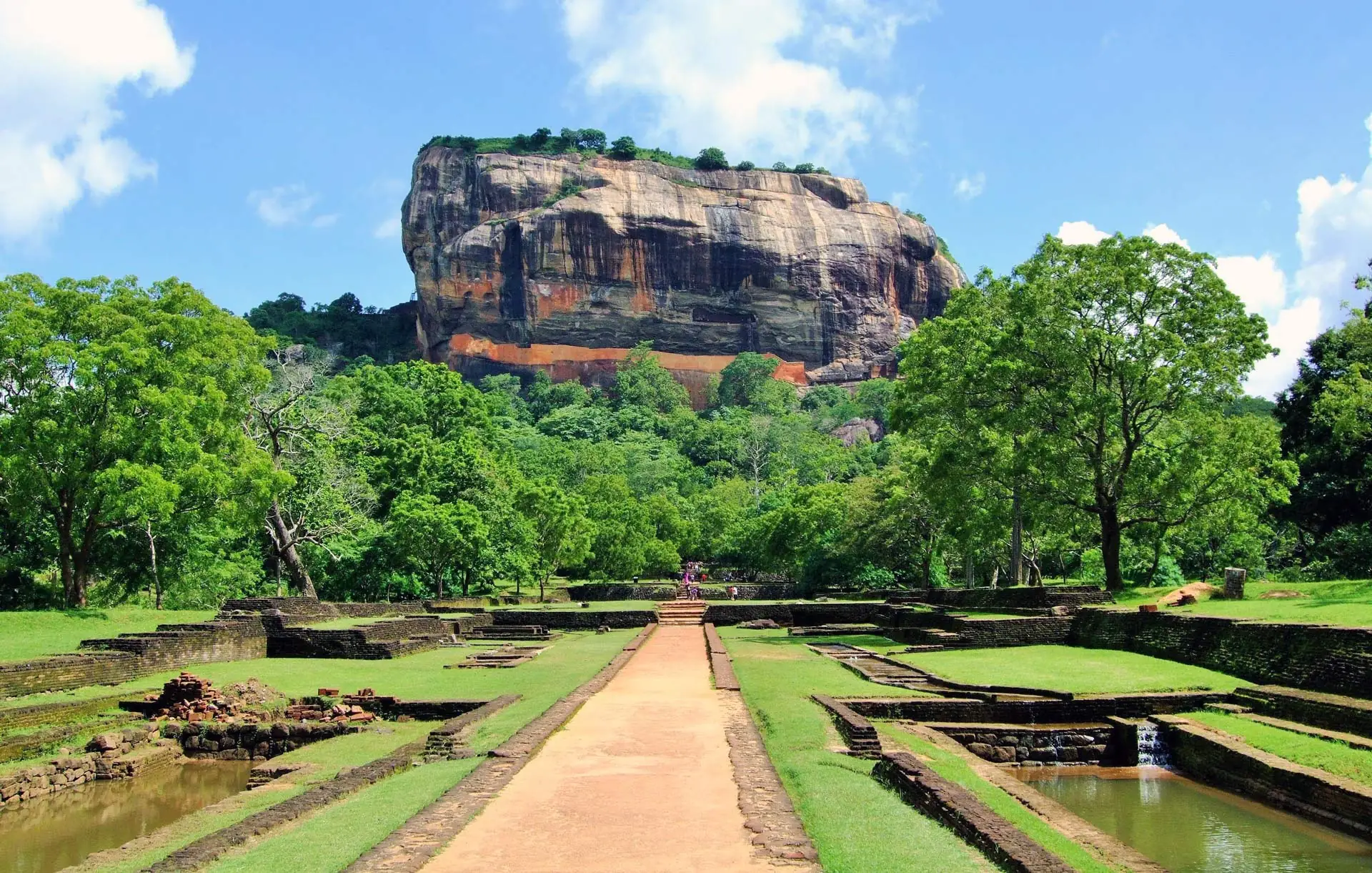
Sigiriya lion rock, also known as Lion Rock, is a massive rock fortress located in the central Matale District of Sri Lanka. This UNESCO World Heritage Site is one of the most popular tourist destinations in the country, attracting thousands of visitors each year.
The fortress was built in the 5th century by King Kasyapa, who ruled Sri Lanka from 477 to 495 AD. The site is famous for its impressive architecture, including the massive rock walls, water gardens, and frescoes that adorn the walls of the fortress.
Visitors to Sigiriya can climb the rock fortress and explore the various levels of the site, including the famous Lion's Gate, which is a massive stone gateway that leads to the upper levels of the fortress. The climb to the top of the rock is steep and challenging, but the panoramic views from the summit are well worth the effort.
Things to Do at Sigiriya
In addition to exploring the fortress itself, visitors can also enjoy a variety of activities in the surrounding area. The nearby Sigiriya Museum offers a fascinating look at the history and culture of the region, while the nearby Pidurangala Rock offers a more challenging climb and stunning views of the surrounding landscape.
For those interested in wildlife, the nearby Minneriya National Park is home to a variety of animals, including elephants, leopards, and a wide range of bird species. Visitors can take a safari tour of the park and experience the natural beauty of Sri Lanka's wildlife up close.
Overall, Sigiriya is a must-visit destination for anyone traveling to Sri Lanka. Its rich history, stunning architecture, and breathtaking views make it a truly unforgettable experience.
When is the best time to visit Sigiriya?
The guide recommends December to April as the generally drier period for visiting and climbing Sigiriya. Weather varies, so check the local forecast and site conditions before your visit.
Tips for Visiting Sigiriya
- Wear comfortable shoes and clothing suitable for climbing.
- Bring plenty of water and sunscreen, as the climb can be physically demanding.
- Consider hiring a local guide to learn more about the history and significance of the site.
- Arrive early in the morning to avoid crowds and enjoy the cooler temperatures.
- Respect the cultural and historical significance of the site by following any posted rules and guidelines.
Getting to Sigiriya
Sigiriya is located approximately 170 kilometers northeast of Colombo, the capital city of Sri Lanka. The most convenient way to reach Sigiriya is by car or taxi, which takes around 4-5 hours from Colombo. Alternatively, visitors can take a bus or train to the nearby town of Dambulla and then take a taxi or tuk-tuk to Sigiriya. There are also several tour operators that offer guided day trips to Sigiriya from Colombo and other major cities in Sri Lanka.
How much is the entrance fee for Sigiriya?
Admission prices can change and may differ by visitor category. Check current Sigiriya ticket prices through the Central Cultural Fund’s official Ticket Issuance service before travelling.
How long does it take to climb Sigiriya?
The time it takes to climb Sigiriya can vary depending on an individual's fitness level and pace. There are roughly 1,200 steps to reach the summit. On average, it takes about 1.5 to 2 hours to climb to the top of the rock fortress, including time to explore the various levels and take in the views.
Are there any facilities available at Sigiriya?
Yes, there are facilities available at Sigiriya, including restrooms, a visitor center, and a small café where visitors can purchase refreshments. Additionally, there are shaded areas and seating available at various points along the climb, allowing visitors to rest and take breaks as needed. It is recommended to bring your own water and snacks, especially during the hotter months, as the climb can be physically demanding.
What are Sigiriya’s opening hours?
Opening times can change for operational reasons or special events. Confirm current hours with the Central Cultural Fund or site management before your visit. Arriving early can help you avoid crowds and cooler temperatures later in the day.
Is the Sigiriya climb safe for people afraid of heights?
While the climb to the top of Sigiriya can be challenging and may involve heights, the site is generally has exposed sections. Handrails and barriers are present along parts of the route, but visitors who are uncomfortable with heights or have mobility concerns should assess their comfort and ability before climbing.
What should I wear to Sigiriya?
Unlike ancient temples in Anuradhapura or Kandy, Sigiriya is an archaeological fortress, not an active religious site. There is no strict religious dress code requiring covered shoulders or knees. Light, breathable clothing and sturdy, enclosed footwear with good grip are highly recommended.
What to keep in mind when visiting Sigiriya?
The Wasp Warning: Sigiriya is home to large, wild colonies of giant Asiatic honey bees and wasps, particularly around the Lion’s Paws area. If you see signs advising silence, please follow them. Loud noises can agitate the nests. If an alert is raised, follow the guides to the designated protective mesh cages along the path.



Sigiriya Lion Rock: Patricide, Paranoid Kings, and the Buried Secrets of Sri Lanka's Sky Fortress
Unknown and Unfamous Historical Information About Sigiriya Lion Rock
Sigiriya stands tall among Sri Lanka’s top viral heritage spots. It earns global fame as the eighth wonder of the world and a prime UNESCO World Heritage Site. It also remains one of the best examples of ancient urban planning across the island nation.
Most travelers know the classic backstory of this iconic landmark. Legend goes King Kashyapa seized power through ruthless means. The illegitimate king killed his father King Dhatusena and stole the throne from his brother Mogallana.
Driven by constant fear and paranoia, he built this towering sky fortress on the massive rock summit. He ruled the region for 18 years before suffering a crushing battlefield defeat. The site was abandoned soon after and later transformed into a peaceful Buddhist monastery.
This popular travel tale is widely shared across Sri Lanka tourism guides and visitor blogs. Yet this simple mainstream story hides far more layered history.
Sigiriya carries plenty of overlooked facts and debated historical details. These lesser known truths add fresh depth to every traveler’s visit to this famous Sri Lankan landmark.
The Mahavamsa Completely Erased Sigiriya
One of the most shocking hidden truths for Sri Lanka culture lovers lies in the island’s ancient historical records. The Mahavamsa, Sri Lanka’s most revered and authoritative historical chronicle, never records a single word about Sigiriya or King Kashyapa.
The well known tale of King Kashyapa and his iconic rock fortress only appears in the Culavamsa. This text is a much later add on to the country’s official historical writings. This major gap in ancient records hints at a deliberate clean up of local history.
Travel enthusiasts and history buffs often wonder why Sri Lanka’s premier sacred chronicle would ignore such a powerful ruler and his one of a kind rock citadel. The site stands as one of the nation’s most stunning ancient architectural wonders.
Local historians and tourism researchers have put forward two credible theories. Many scholars state Kashyapa was branded a traitor and father killer. His immoral reign made him unworthy of a place in the sacred historical scripture.
Other experts hold a different view. They believe the writers of the Mahavamsa intended to wipe the entire Moriya dynasty from Sri Lanka’s official historical memory, leaving no trace of its rule.
Kashyapa May Not Have Killed His Father
Every Sri Lanka heritage tour features the popular mainstream story of King Kashyapa. The common tale labels him as a cruel ruler who trapped and killed his father by walling him alive.
Modern local history researchers have uncovered new perspectives that challenge this classic story. Many tourism focused historical studies claim this popular account is a twisted version of the real events.
Alternative analyses of ancient Sri Lankan records tell a completely different story. King Kashyapa may have caused his father’s death by accident during a battle. His brother Mogallana is believed to have planted false information to mislead Kashyapa on purpose.
This fresh take changes the core of the iconic Sigiriya legend. Kashyapa never planned to harm or murder his father. He fell for his brother’s scheme and stumbled into a fatal battle confrontation.
For curious travelers exploring Sigiriya’s rock ruins, this detail adds touching depth to the site. After the tragic accident, Kashyapa built the massive rock fortress for more reasons than just self defense.
He created this world famous landmark as a sincere tribute and repentance for his father’s death. This historical reinterpretation reshapes Kashyapa’s image entirely. He is no longer a ruthless cold blooded tyrant, but a tragic royal figure haunted by lifelong guilt.
Sigiriya Was a Buddhist Monastery Before It Was a Palace
Most casual visitors to Sigiriya learn one fixed story from standard tourist guides. These mainstream travel write ups frame the iconic rock site as a royal palace from its very origin.
Serious history enthusiasts and local archaeologists share a very different truth. Experts have debated for decades that Sigiriya was never built first as a royal residence.
Solid archaeological finds and ancient stone inscriptions back this unique theory. Long before King Kashyapa’s reign, Sigiriya existed as a sacred Mahayana Buddhist forest retreat.
The popular Sri Lanka landmark we admire today is not a pure royal creation. Kashyapa seized this already established holy ground. He redesigned and repurposed the sacred premises into a lavish pleasure palace and secure military fortress.
The site returned to its spiritual roots right after Kashyapa’s defeat and death. It functioned as a peaceful Buddhist monastery all the way until the 14th century.
This hidden detail surprises most travelers on Sri Lanka cultural tours. The famous Sigiriya palace complex stands entirely on the foundations of an ancient religious sanctuary. This key historical fact is almost never featured in regular tourist materials.
Sigiriya Frescoes Hidden Secrets for Sri Lanka Cultural Tourism Lovers
Sigiriya stands as one of Sri Lanka’s most iconic UNESCO heritage sites and a top cultural travel spot. Its 21 surviving rock frescoes earn global fame and draw countless heritage tourists every year. Yet most local tour guides skip over the lesser known truths behind these ancient paintings.
The original artwork scale will surprise every cultural explorer. The rock face once featured 500 painted female figures instead of the 21 visible today. Ancient visitor graffiti on the famous Sigiriya Mirror Wall confirms this historic detail. These old inscriptions date back centuries after King Kashyapa’s rule and clearly document the full collection of 500 ladies on the rock surface. Long term weather erosion and natural aging have erased nearly all of this priceless ancient art.
Travel enthusiasts and history researchers still debate the true identity of these painted figures. Many heritage experts believe they represent heavenly cloud and rain nymphs known as Apsaras from ancient folklore. Other local historians argue they depict royal concubines from the king’s private palace court.
Fresh findings from a German archaeological photographer bring new light to this classic Sri Lanka heritage attraction. Rainer Franz puts forward a modern theory that the figures are ordinary royal court ladies serving King Kashyapa, not mythical celestial beings. His field research also reveals the entire Sigiriya rock and surrounding areas were once fully covered in detailed paintings. What tourists witness now is only a tiny portion of the original grand ancient art landscape.
One intriguing mystery keeps cultural travelers curious about Sigiriya’s history. The famous ancient Sri Lankan chronicle Culavamsa records the full story of King Kashyapa’s reign. Surprisingly, this authoritative historical text never mentions the Sigiriya frescoes at all. This key detail makes many scholars question whether these stunning artworks were actually created during Kashyapa’s era.
The Lion Gate May Not Have Been a Lion at All
The name Sigiriya means "Lion Rock," derived from the colossal lion gateway that once stood halfway up the rock. The massive brick and plaster paws that remain today are iconic.
But some writers have controversially suggested that the structure was not a lion at all. They argue it may have been a bird's foot or a Garuda claw. Others have even attempted to claim Sigiriya as a Chola monument built by a Tamil ruler. Mainstream historians reject these theories. The Culavamsa explicitly records that King Kashyapa built a gateway in the form of an enormous lion, and the name Sīnhāgiri (Lion Rock) is directly derived from this structure. However, the very existence of these alternative theories shows how deeply contested Sigiriya's history remains.
The Hydraulic System: A Mystery Modern Engineers Cannot Fully Explain
Sigiriya's ancient water system is one of the most sophisticated in the ancient world. It includes canals, lakes, dams, bridges, and fountains that still function today. Recent restoration work has finally confirmed how the fountains operate. The moat surrounding Sigiriya holds a slightly higher water level, which channels water into the fountains to activate them during the rainy season. The system is gravity-fed, drawing water from a reservoir above the gardens through underground clay aqueducts.
But here is the part that baffles modern engineers. There are persistent local legends that water was pumped from ground level all the way to the top of the rock to create pools for the royal women. Some believe that the ancient engineers possessed a special technology to extract rain from the clouds. A civil engineer interviewed in 2003 stated that while such technologies may have possibly existed, they remain unconfirmed and cannot be explained by modern knowledge. The engineering feats of Sigiriya, he said, remain a mystery to this day.
The Garden Was "Discovered" Only in the 1980s
The elaborate water gardens at the base of Sigiriya are now a major attraction. But here is a shocking fact. Neither the archaeologists who laboured over Sigiriya for centuries, nor the Culavamsa chronicle, ever mentioned that there was a vast landscape garden at Sigiriya.
The garden was completely unknown until the 1980s, when relentless excavations by the Department of Archaeology brought its remains to the surface. It was only then that the garden was restored and landscaped. This means that for over 1,400 years, the garden lay buried and forgotten, with no historical record of its existence.
Furthermore, the claim that Sigiriya has "the oldest surviving landscape garden in Asia" has been strongly disputed by the Director General of the Central Cultural Triangle, who called it a "distortion of historical facts".