- Home
- Places to Visit
- Anuradhapura Ancient City
Anuradhapura Ancient City
What is Anuradhapura?
Anuradhapura is the ancient capital of Sri Lanka, known for its well-preserved ruins of an ancient civilization. It was a major center of Theravada Buddhism for many centuries.
History of Anuradhapura
When was Anuradhapura founded?
The city was founded around the 5th century BCE and became the Sinhalese capital from the 4th century BCE. According to the Mahavamsa chronicle, King Pandukabhaya is recognized as its formal founder and first monarch, establishing his administration there around 377 BCE. Archaeological evidence, however, suggests the site's settlement history dates back even further, to the Protohistoric Iron Age (c. 900-500 BCE).
When was Buddhism introduced to Anuradhapura?
A pivotal moment came in the 3rd century BCE when Buddhism was introduced to Sri Lanka under King Devanampiya Tissa. The city grew into a major center for Theravada Buddhism. A sacred branch of the Bodhi tree (the very tree under which the Buddha attained enlightenment) was brought and planted in the city around 245 BCE, a revered relic that may be the oldest historically documented tree in the world. This era saw the construction of monumental Buddhist structures, including massive stupas (dagobas), monasteries, and palaces.
Golden Age and Decline
During its golden age, Anuradhapura was a thriving metropolis with advanced irrigation systems, including reservoirs and canals, which supported agriculture and sustained the population. The city was a hub of trade and culture, attracting scholars, monks, and pilgrims from across Asia. However, by the 10th century CE, the city began to decline due to repeated invasions from South Indian kingdoms, leading to its eventual abandonment in favor of Polonnaruwa as the new capital.
Why is Anuradhapura a UNESCO World Heritage Site?
Rediscovered in the 19th century by British colonial archaeologists, Anuradhapura has since been the focus of extensive archaeological research and restoration efforts. Today, it is recognized as a UNESCO World Heritage Site, attracting visitors from around the world who come to explore its ancient ruins, sacred sites, and historical significance.
Modern Significance
Today, Anuradhapura remains a vital pilgrimage site for Buddhists and a symbol of Sri Lanka's rich cultural heritage. Its ancient structures, including the Ruwanwelisaya, Jetavanaramaya, and Abhayagiri Dagoba, continue to inspire awe and reverence among visitors and scholars alike.
What are the main places to visit in Anuradhapura?
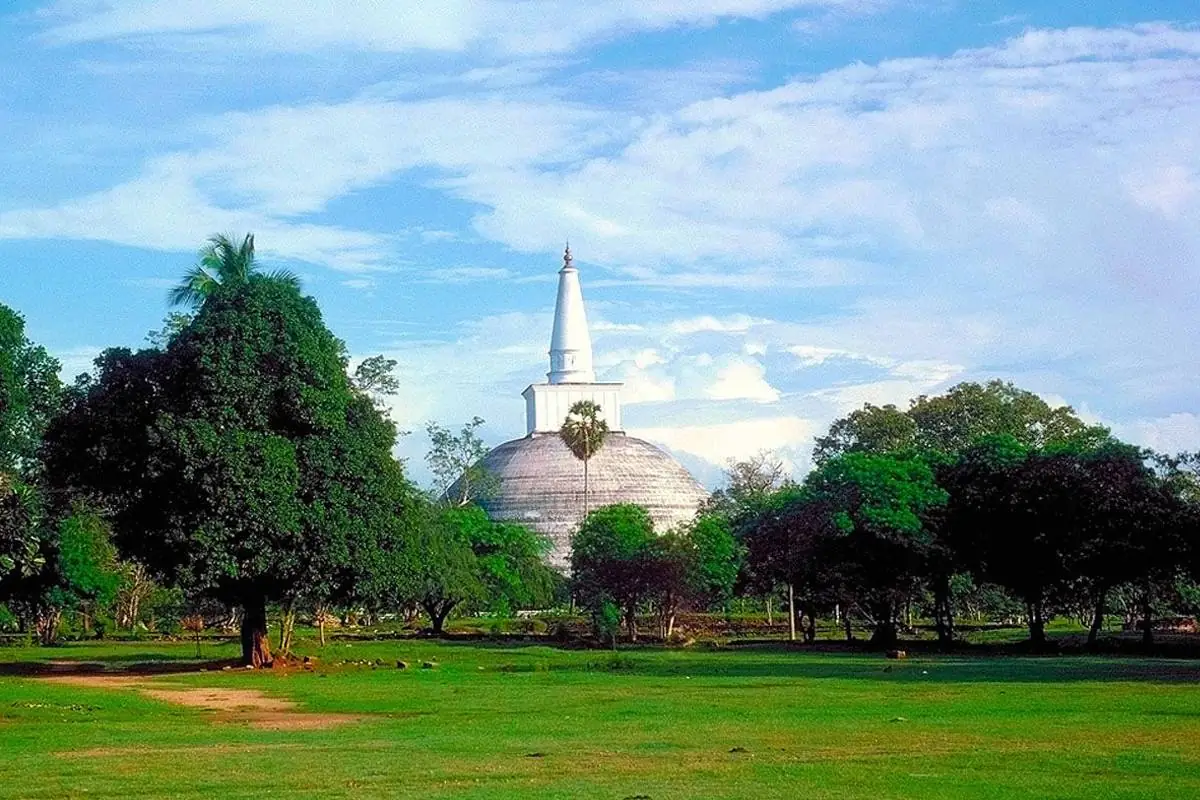
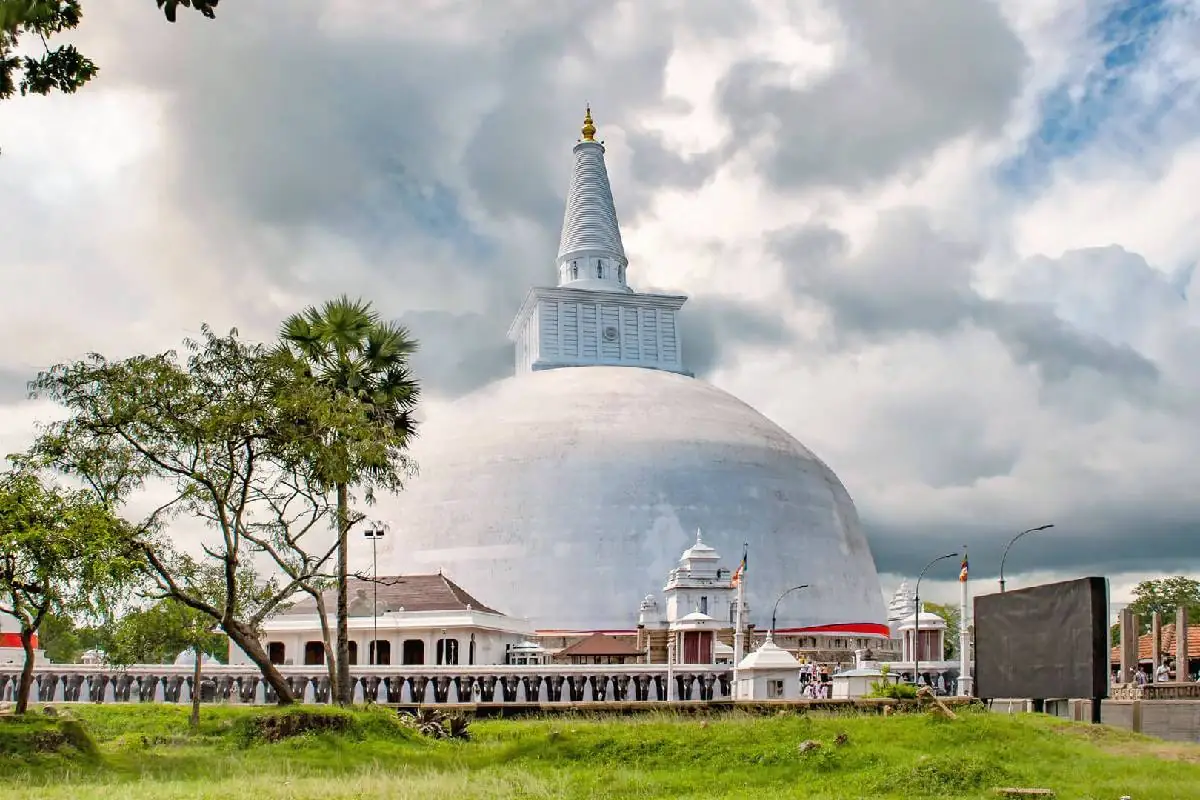
Ruwanwelisaya Stupa: It is one of the most important and sacred stupas in Sri Lanka. Built by King Dutugemunu in the 2nd century BC, it is believed to enshrine relics of the Buddha. Presently, it remains a significant site for Buddhist worship and pilgrimage. Height: 103 meters. It fell into ruins over time and has been partially restored in early 1900s by the Archaeological Department of Sri Lanka.
Sacred Bodhi Tree: The Sacred Bodhi Tree, also known as the Sri Maha Bodhi, is a sacred fig tree in Anuradhapura. It is believed to be a sapling from the original Bodhi tree under which the Buddha attained enlightenment. The tree was planted in 288 BC and is considered one of the oldest living trees with a known planting date. It was planted around 236 BCE (or 249 BCE) by King Devanampiya Tissa. For over two millennia, successive kings have protected and maintained it.
Thuparamaya: Thuparamaya is the first stupa built in Sri Lanka after the introduction of Buddhism. It was constructed by King Devanampiya Tissa in the 3rd century BC and is believed to enshrine the right collarbone of the Buddha.
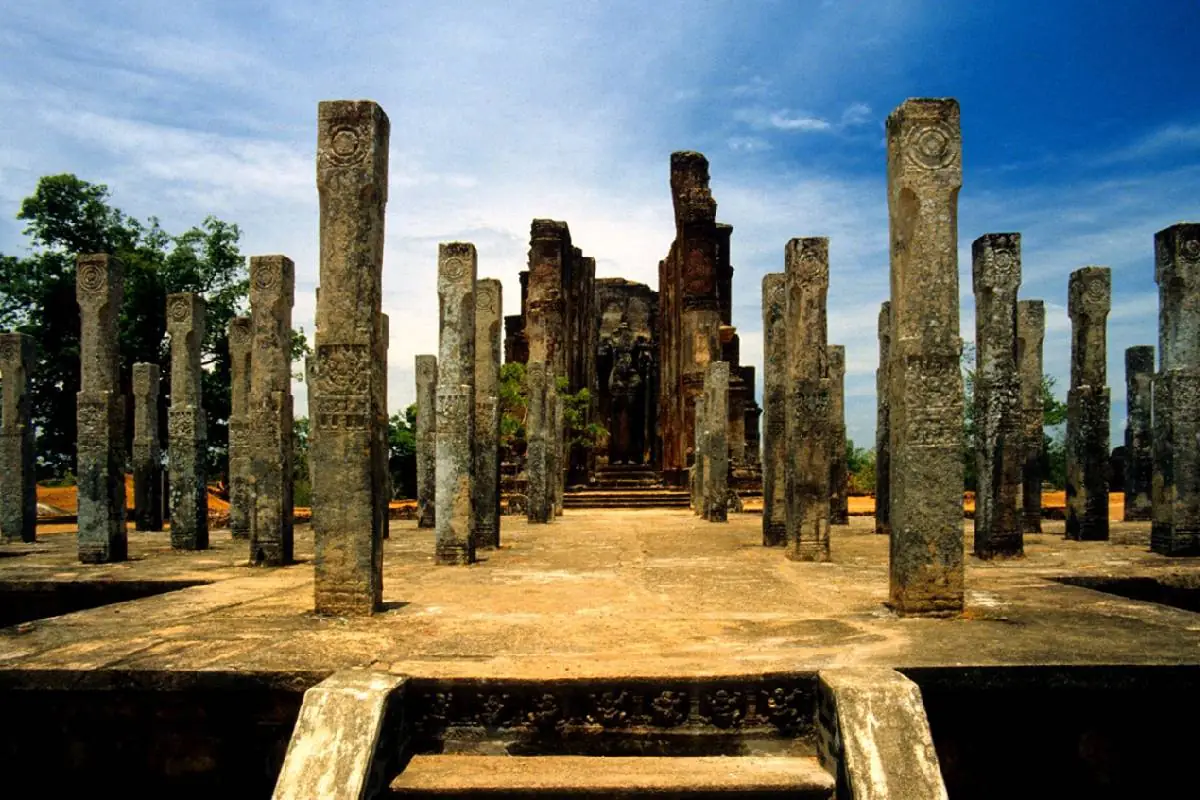
Lovamahapaya: Also known as the Brazen Palace, Lovamahapaya was a nine-story building constructed by King Dutugemunu in the 2nd century BC. It served as a residence for Buddhist monks and was adorned with bronze tiles, hence its name. Today, only the base and some pillars remain, but it is still an important historical site.
Isurumuniya Vihara: Isurumuniya Vihara is a Buddhist temple known for its rock carvings and sculptures. It was built in the 3rd century BC and is famous for the "Isurumuniya Lovers" sculpture, which depicts a couple in an intimate embrace. The temple is also home to several other carvings and inscriptions that provide insight into the history and culture of ancient Sri Lanka.
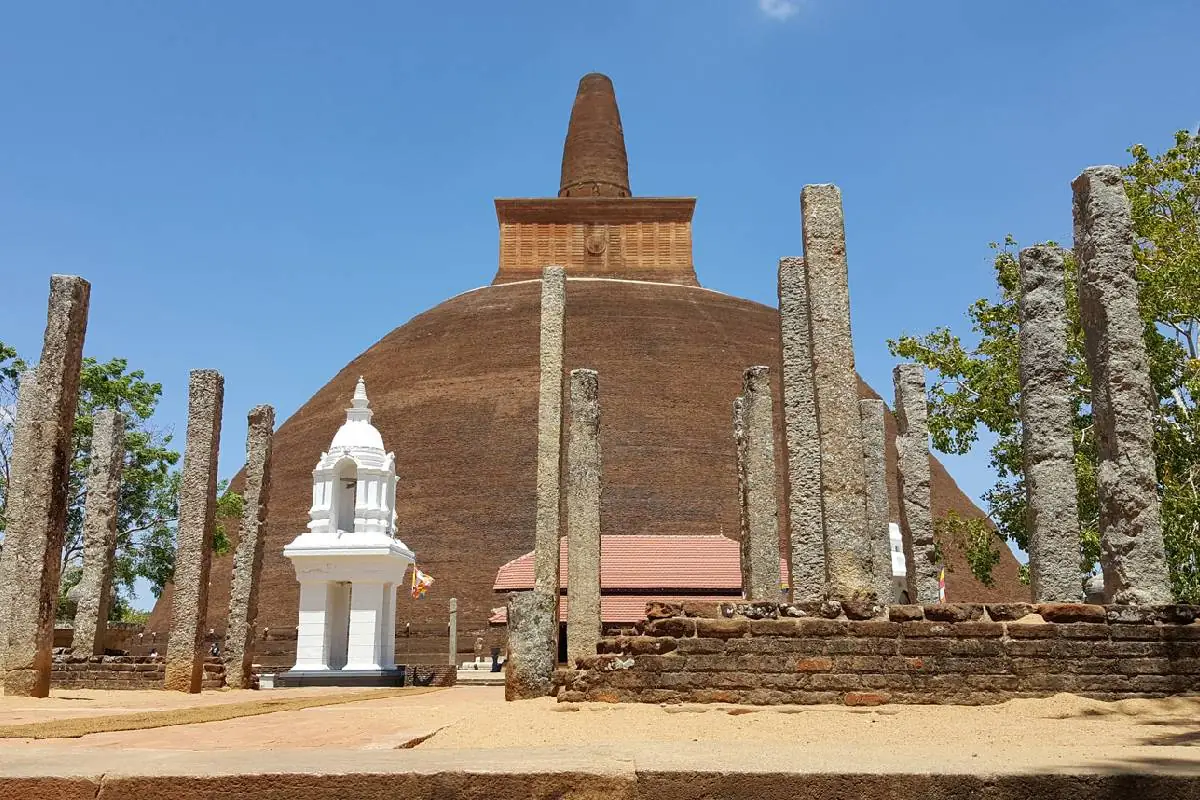
Abhayagiri Stupa: The Abhayagiri Stupa was built by King Valagamba in the 1st century BC and is one of the largest stupas in Sri Lanka. It was once home to a large monastery and is believed to have housed many relics of the Buddha. Height of the stupa is 115 meters. Built material is brick and covered with lime plaster.
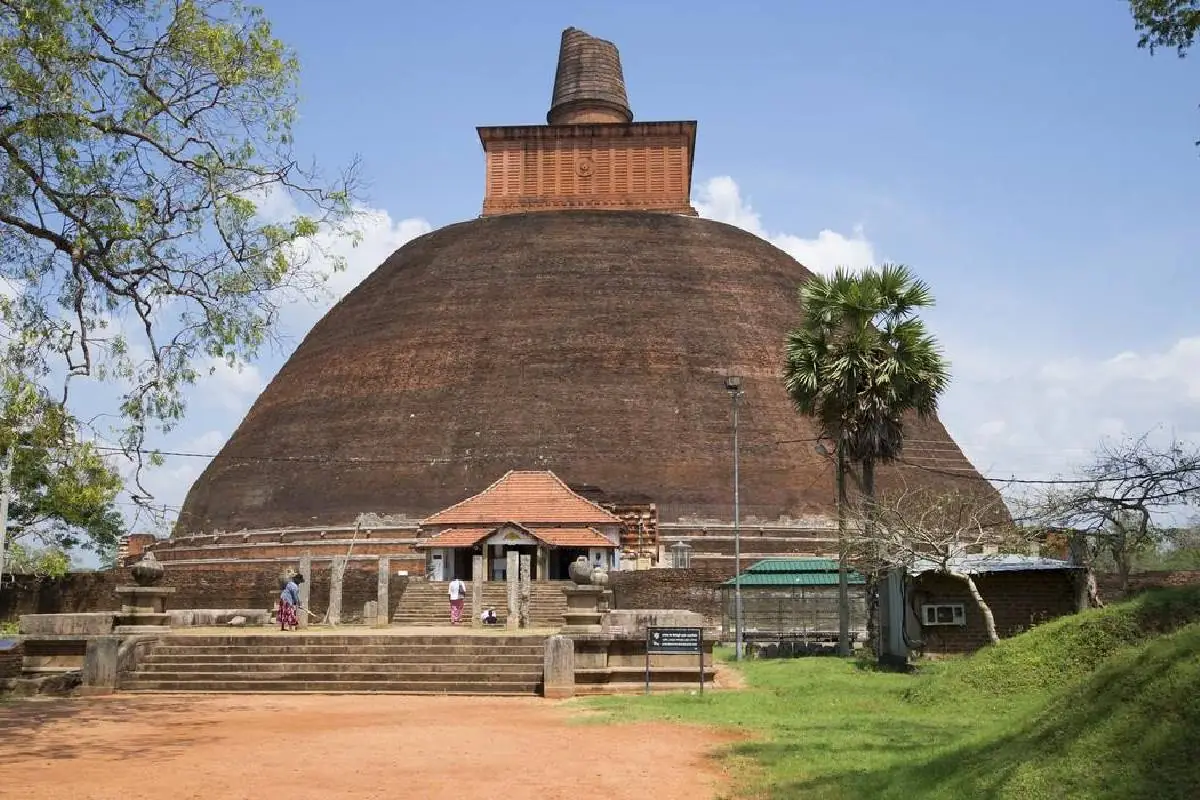
Jetavanaramaya stupa: It was built by King Mahasena in the 3rd century AD and is one of the tallest structures in the ancient world. Height of the stupa is 122 meters. Built material is brick and covered with lime plaster.
Mirisaveti Stupa: The Mirisaveti Stupa was built by King Dutugemunu in the 2nd century BC and is believed to contain relics of the Buddha. It is known for its beautiful carvings and is one of the most important pilgrimage sites in Sri Lanka. Built by King Dutugemunu.
Lankarama stupa: King Valagamba built the Lankarama stupa in the 1st century BC. He built it to honor his queen, Soma Devi It is believed to contain relics of the Buddha and is known for its elaborate carvings.