- Home
- Places to Visit
- Ancient City of Polonnaruwa
Polonnaruwa: Sri Lanka's Medieval Kingdom
-
What is Polonnaruwa?
Polonnaruwa is an ancient city in Sri Lanka's North Central Province. It served as Sri Lanka's second capital after Anuradhapura and is renowned for its well-preserved ruins of palaces, temples, and statues.
-
History of Polonnaruwa
Polonnaruwa was established as the capital of Sri Lanka in the 11th century by King Vijayabahu I, who defeated the Chola invaders. The city flourished under King Parakramabahu I in the 12th century, who is credited with constructing many of the city's iconic structures, including Parakrama Samudra, a massive reservoir that still supplies water to the region today.
-
UNESCO World Heritage Site
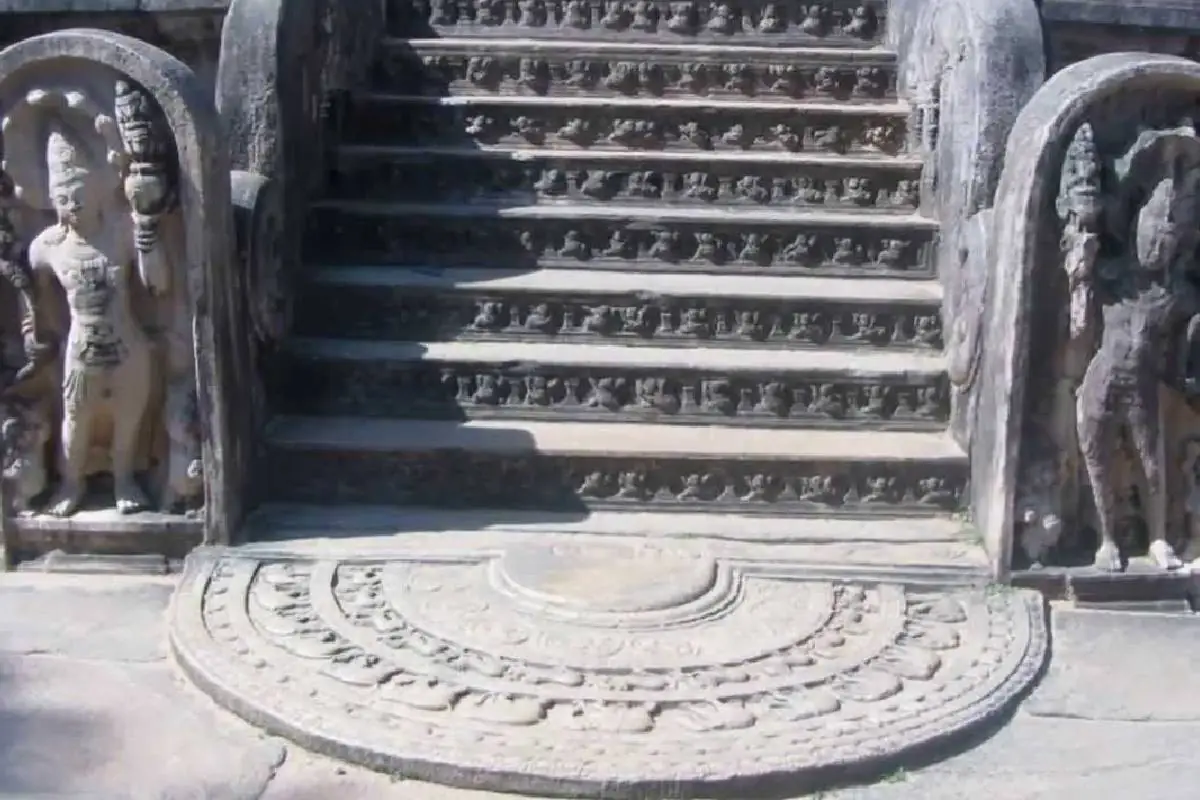
Polonnaruwa was designated a UNESCO World Heritage Site in 1982 for its historical and cultural significance. The archaeological site includes the Royal Palace, the Quadrangle, Gal Vihara, and other temples and monuments that showcase the architecture and artistry of ancient Sinhalese civilization.
-
Explore the Ancient City
Begin at the Polonnaruwa Museum, where you can buy the archaeological park entry ticket and learn about the city's history. Then explore the Royal Palace, Gal Vihara, the Quadrangle, and the other historic sites listed below.
- Royal Palace: The remains of the Royal Palace complex, which includes the king's residence, audience halls, and other administrative buildings.
- Gal Vihara: A rock temple featuring four large Buddha statues carved into the granite rock face, showcasing the skill of ancient Sinhalese sculptors.
- Quadrangle: A collection of religious and administrative buildings, including the Vatadage (a circular relic house), the Thuparama (a stupa), and the Hatadage (a library).
- Parakrama Samudra: A massive reservoir built by King Parakramabahu I, which is still in use today and serves as a testament to the advanced engineering skills of the ancient Sinhalese civilization.
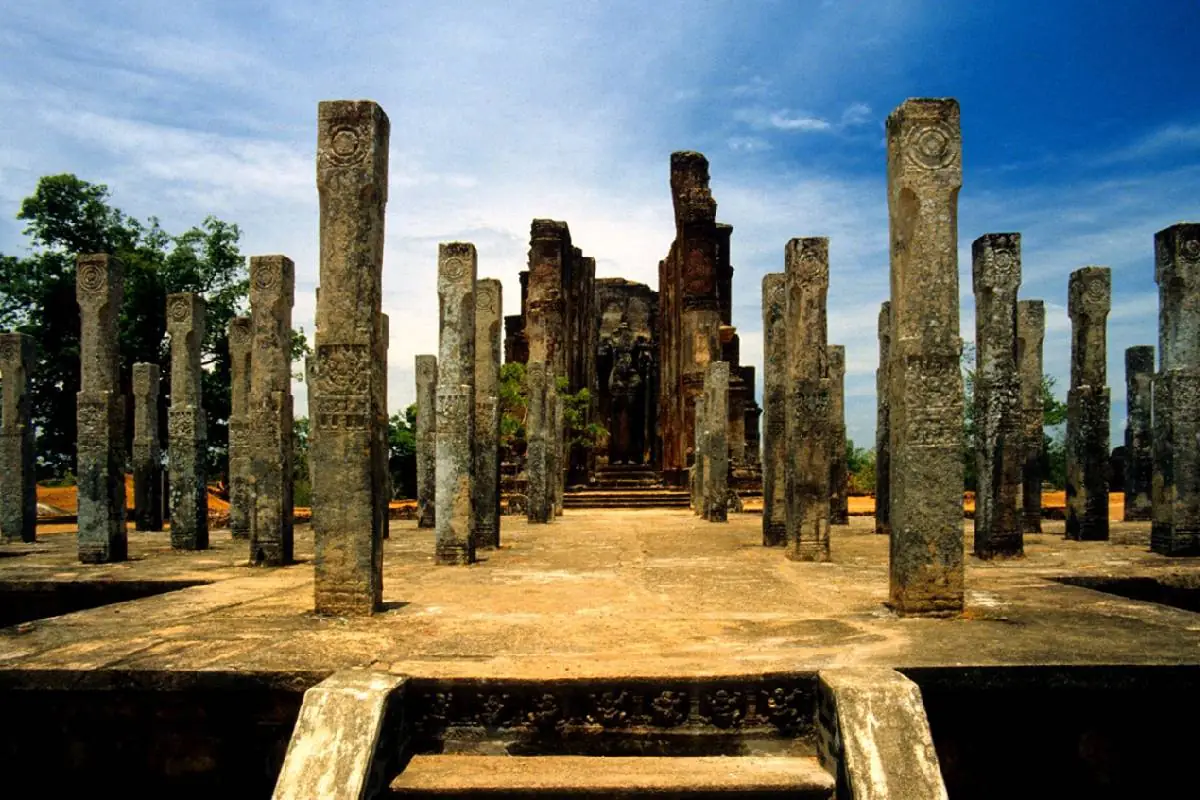
- Lankatilaka: A large Buddhist temple with impressive architecture and intricate carvings, reflecting the artistic achievements of the Polonnaruwa period.
- Rankoth Vehera: A large stupa that is one of the tallest structures in Polonnaruwa, offering panoramic views of the surrounding area.
- Polonnaruwa Vatadage: A circular relic house that is considered one of the finest examples of ancient Sinhalese architecture, featuring intricate stone carvings and a unique design.
- Polonnaruwa Museum: A museum that houses a collection of artifacts and exhibits related to the history and culture of Polonnaruwa, providing visitors with a deeper understanding of the city's significance.
- Polonnaruwa Archaeological Park: A vast area that encompasses the ruins of the ancient city, allowing visitors to explore the various structures and monuments at their own pace.
- Sath mahal Prasada: A seven-story tower that is believed to have been used for religious purposes, offering a unique perspective on the architectural style of the Polonnaruwa period.
- King Parakramabahu's Palace: The remains of the palace complex built by King Parakramabahu I, showcasing the grandeur and sophistication of the royal architecture during his reign.
- Kumara Pokuna: A large bathing pool that was used by the royal family and is an example of the advanced water management systems in place during the Polonnaruwa period.
- Council Chamber: A building that served as a meeting place for the king and his advisors, reflecting the administrative structure of the ancient city.
- Polonnaruwa Hatadage: A library that housed important religious texts and manuscripts, highlighting the intellectual and cultural achievements of the Polonnaruwa period.
- Atadageya Temple: A small temple that is believed to have been used for religious ceremonies and rituals, providing insight into the spiritual practices of the ancient Sinhalese civilization.
- Pothgul Vihara: A temple that features a large reclining Buddha statue, showcasing the artistic and religious significance of the Polonnaruwa period.
- Parakrama bahu statue in Polonnaruwa: A statue of King Parakramabahu I, commemorating his contributions to the development and prosperity of Polonnaruwa.
- Alahana Pirivena: A monastic complex that served as a center for Buddhist learning and education, reflecting the importance of religion and scholarship in the ancient city.
- Alahana pirivena bhikku hospital in Polonnaruwa: A hospital that provided medical care to monks and the local population, demonstrating the advanced healthcare practices of the Polonnaruwa period.
- Lotus pond in Polonnaruwa: A decorative pond that was used for aesthetic and recreational purposes, adding to the beauty and tranquility of the ancient city.
- Thivanka Image House: A building that housed important religious images and artifacts, showcasing the artistic and cultural achievements of the Polonnaruwa period.


Unveiling Polonnaruwa: The Hidden Chapters of a Lost Kingdom
The Velakkara Revolt (1084): Mercenaries Who Burned the Palace
The Polonnaruwa Kingdom relied heavily on foreign mercenaries, but this dependence came with deadly consequences.
In 1084, the Velakkara mercenaries of the Polonnaruwa Kingdom revolted. They were unwilling to fight against their Tamil kinsmen after King Vijayabahu I declared war on the Chola Empire
The mercenaries mutinied and burnt down the royal palace, forcing King Vijayabahu I to flee to Vatagiri.
After the king returned and defeated the insurrection, he ordered the ringleaders of the revolt to be burnt in the same funeral pyres of the generals they had killed
Vijayabahu then made an agreement that the Velakkara mercenaries would protect the Temple of the Tooth.
The Polonnaruwa–Pagan War (1165–1181): A Trade Dispute Turned Bloody
King Parakramabahu the Great is celebrated as a unifier and builder, but he also launched a devastating war against the Pagan Kingdom of Burma.
The war occurred between 1165 and 1181 as a result of a trade dispute between the two states.
The conflict was triggered when the Burmese king Narathu, who had assassinated his predecessor to claim the throne, deprived Sri Lankan envoys of their maintenance and prohibited the sale of elephants to foreign countries.
According to the Glass Palace Chronicle, King Narathu was later assassinated by a Sinhalese squad in 1171.
A Dynasty of Assassination and Ephemeral Kings
The fall of Polonnaruwa was marked by an astonishing series of short reigns, betrayals, and assassinations.
Vijayabahu II reigned from 1186 to 1187. He was assassinated after only one year following a love intrigue with the daughter of a cowherd.
Mahinda VI killed his predecessor Vijayabahu II and proclaimed himself king. His reign lasted only five days before he was executed by Nissanka Malla.
Vira Bahu I came to the throne after his father's death in 1196 but reigned for less than a day. He was crowned at night and slain at dawn by the commander-in-chief of the army.
Vikramabahu II reigned for only a few months in 1196 before being assassinated by his own nephew, Chodaganga.
Anikanga invaded Polonnaruwa with Chola support, slaughtered the infant king Dharmasoka, and seized the throne. His reign lasted just 17 days.
This sequence of ephemeral successions, puppet queens, and interim military rulers hastened Polonnaruwa's fragmentation.
The Magha Invasion: Unbridled Plunder and Destruction
The final blow to Polonnaruwa came in the 13th century with the invasion of Magha, a king from Kalinga in South India.
Magha recruited an army from Kerala on his way to Sri Lanka.
His forces engaged in unbridled plunder and pillage in Rajarata, destroying even Buddhist stupas (Cetias).
When Magha seized Polonnaruwa, he handed over Sinhalese Buddhist properties to his Kerala soldiers.
Dispossessed Sinhalese Buddhists fled to the southwest.
Taking advantage of the collapse of the Polonnaruwa kingdom after Magha's fall, a South Indian dynasty called the Arya Chakaravartis seized power in the north.
The Mysterious Satmahal Prasada: A Structure With No Known Purpose
Among the ruins of Polonnaruwa stands one of its greatest mysteries.
The Satmahal Prasada is a 12th-century step pyramid in the northeast corner of the archaeological complex.
It is unique in the area, and its builder and purpose remain completely unknown.
While it is believed to be a stupa because of its Buddhist environment, there is no certainty about its origin.
It has been compared to step pyramids in Thailand and Cambodia, and even to the pyre of Hephaestion built by Alexander the Great.
Polonnaruwa FAQs
What is Polonnaruwa?
Polonnaruwa is an ancient city in Sri Lanka’s North Central Province. It served as Sri Lanka’s second capital after Anuradhapura and is known for its well-preserved palaces, temples, and statues.
Why is Polonnaruwa a UNESCO World Heritage Site?
Polonnaruwa was designated a UNESCO World Heritage Site in 1982 for its historical and cultural significance and its ancient monuments, including the Royal Palace, the Quadrangle, and Gal Vihara.
What are the main attractions in Polonnaruwa?
Key sights include the Royal Palace, Gal Vihara, the Quadrangle and Vatadage, Parakrama Samudra, Rankoth Vehera, Lankatilaka, and the Polonnaruwa Museum.
Where should I start exploring the ancient city?
Start at the Polonnaruwa Museum, where visitors can buy the entry ticket for the archaeological park and learn about the city’s history before exploring the ruins.